
Sometimes a situation, in hindsight, seems crystal clear. Even though, as it happens, you may find yourself confused or scared, there’s a divine clarity when it all comes together.
For me, one of the biggest examples is my son, Lucas. At 12 years old, he is one of the greatest highlights of my life. I’ve devoted time and words to telling the world how wonderful he is and illustrating how your child being non-verbal doesn’t end the chances of a strong relationship with them.
In fact, most of my writing deals with autism appreciation. Many of his most unique and beautiful qualities are because of his autism. Whether it’s his carefree approach to life, loving response to many moments, or just his one-of-a-kind way of interacting, I’ve learned to see the wonderful traits that his “disability” has brought with it.
I put disability in quotes because I’m saying in a somewhat sarcastic way. Having read the same memes and comments online from many, I know that there are those who insist that it is a disability and nothing more. According to some, people like me are simply overlooking the hardships. I’m trying to convince you everything is great when it’s not. Perhaps, I’m trying to convince myself. That’s how they see it.
And they’re wrong.
Make no mistake, I have cleaned up enough messes and dealt with situations that I never would have imagined due to Lucas’s autism. We have missed functions, events, and shows because of his overstimulation or inability to sit still. Parties have been halted and frustrations have played out. I know what autism is. Everyone in my family does. No one is pretending otherwise.

Of course, I can provide a laundry list of issues that other people in my life have caused me, most without autism. I can tell you about the struggles of friends who have children, not on the spectrum, battling difficult issues themselves. Simply being a responsible adult who has to interact with others, regardless of language skills, is a pain and it’s not just lack of speech that makes it hard.
Seeing Lucas as I do took a while and, once that new view kicked in, everything changed. I was able to see how lucky I was to be his father without having to add “despite his autism.” I could see how lucky I was, in many ways, because of his autism.
Why did this take me a while? While I often talk about my surprise quintuple bypass in 2012 as the catalyst that altered my thinking, it was more than that. In many ways, it was the knowledge that only comes with the passing of time.
When I was the first to spot autism’s early signs, I didn’t know what it meant. All I knew was that autism, the thing that I was told to fear long before my son was even born, was now at my doorstep. Not only did I not know what that meant for our family, I didn’t know what it meant in general.
My son was tiny. He hadn’t developed real hobbies or relationships. Any parent to a baby knows what it’s like to try to envision what he or she will be like as they grow up. It is less like an educated guess and more like an imagined scenario. Telling the future, especially when faced with a mysterious new element is impossible.
My child’s “disability” was new and one that that had never been framed in any other way than as dire. Every warning, every red flag, and every cautionary tale was now a potential reality. It was terrifying and, in that moment, all I wanted to do is “fix” it.
Fix what? Not sure. Make him talk maybe? That was part of it. I felt like words were at least a tangible goal that would make things better. If I could give him language, he would have that aspect taken care of. As for the rest of it, I had no idea. I didn’t even know what “the rest of it” was.
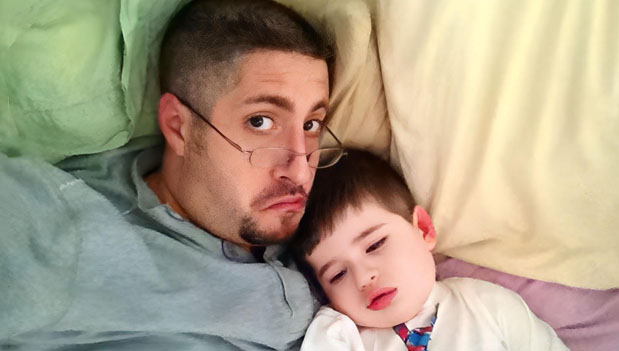
Learning that took years and wasn’t something I could read in a book. I couldn’t find it online or discover it from a meme. Doctors, social media, and snake oil salesmen couldn’t show me how autism would affect my son. Only my son could show me that.
I had to observe him and see what autism truly meant in our home. Aside from that, all I could do was dream up possibilities. The eventual reality never came close to matching the doom that those possibilities presented.
Are there difficulties to it? Sure. Are there difficulties to raising any child? Sure. Is it necessarily comparable? Maybe not in every case. At the end of the day, raising a non-verbal child can be tough. You need patience, understanding, and the ability to view the world through the lens your child does. Given the unique way Lucas sees the world, that can sometimes be a daunting task.
All that being true, it’s also nowhere nearly as hard as I thought it would be. That could be a statement over my distraught view of it from the start. Maybe I went into things with such a lowered expectation that I was almost assured an easier path because of it. The old saying, “nowhere to go but up” could be fitting in some respects.
To be honest, though, that’s not it. I think the biggest reason why I’m able to see the positives of my son’s autism over the negatives is because I’ve had time to get to know him. I’ve had to time to love him and understand him. Even his most overwhelming parenting challenges are doable because he’s my boy and, just like his neurotypical sister, there’s nothing I wouldn’t do for him.
I wouldn’t trade my son for anything in the world. Today, when I try to see his future, I’m able to see the challenges that will come along. I don’t, however, let them overtake the full picture. I know that any potentially bad moments will be balanced out with the good. I know that because I see it in him today. Autism makes my boy who he is – an amazing blessing that I’m lucky to have in my life.
READ NEXT:
Unspoken Progress: Marking Milestones with My Non-Verbal Son

 Hi Blog! I'm Dad.
You must be logged in to post a comment.