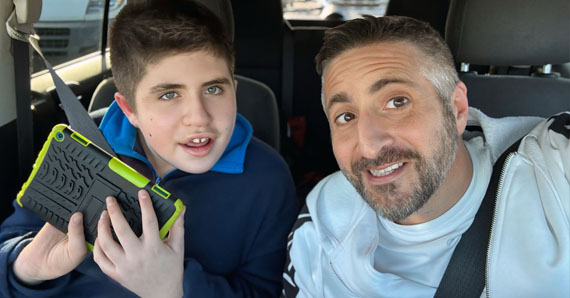
I know that the way I view my non-verbal son’s autism is unique. Since Lucas was diagnosed at a young age, I’ve learned to focus on the things about him that are beautiful, pure, and unlike anyone else.
Also, I learned to remove myself when assessing things. It’s not about whether or not there’s more work to be done or if I can have the same parental freedom that other dads of 13-year-olds have. When talking about autism appreciation, it’s about Lucas. It’s not about me or my emotions.
My emotions, especially then, were all over the place and stretched beyond the parental responsibilities that autism might present. The feelings that have come up when parenting my son have been deep and hit me from a number of different angles. To ignore the earliest and darkest days of our journey is to trivialize the realizations that eventually came. I can’t tell the story of learning to love my son for who he is without acknowledging the fear I had of who he might become.
The truth is, I had no idea what Lucas would be like as a teenager when he was still little. It was a lot of fear, concern, and guesswork. The future for my son, like many young children, was still up in the air.
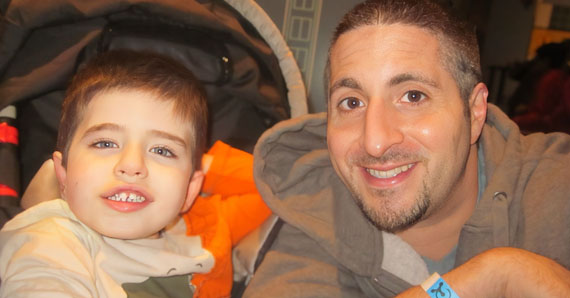
However, the biggest issue early on was that I had no answers at all. It wasn’t just that I didn’t know what the future held for autism. I couldn’t tell you what happened in the past to cause his autism – and believe me, people asked. I also couldn’t tell you what was happening in that moment. Past, present, and future all blurred together. I couldn’t make sense of any of them.
There is a deep pain in not being able to tell people why your child is doing the things they are doing. Why is he lying on the floor in music class? Why is he clapping at his reflection in the mirror? Why doesn’t he talk? I didn’t know what to tell anyone and that’s what made it so hard.
Every question felt like a dagger. Every shrug of my shoulders felt like a failure. What kind of father can’t answer basic questions about his baby boy? Me. That’s who.
And that brings a level of guilt that few understand. It’s a level of guilt that starts with being questioned about what I, as a parent, did to “cause” the autism. People came with checklists and Facebook links that showed me how, somewhere, I must have neglected a vital step in his arrival. This undefined issue was clearly my fault and the undefined way that it would catastrophize our lives was on me.
Spoiler alert – our lives aren’t a catastrophe, but back then it felt that way. The reality today doesn’t match that concern, but it doesn’t make that fear I had any less real.
Guilt came in many forms and sometimes they were born out of good intentions. To this day, I still remember the moment I felt like Lucas’s non-verbal issues were truly said out loud within our home.
Much like I did with my daughter, I narrated Lucas from the moment he was brought home from the hospital. I would use an old-timey voice and greet his sister with a “Hey there, bub” as she entered the room. Olivia loved it. He was like a tiny Muppet.
It was a cute little thing we did and many parents do the same thing with their newborns. It was fun for my daughter and made my infant son a part of the family immediately. Everything about it seemed positive. She would come into the room and run over with a big hello for her brother and then look to me for his part. I would oblige in the “Lucas voice.”
“Hey dere, sis! How goes it?”
We’d laugh. Eat animal crackers. It was great.

Then, one day, it wasn’t great anymore. Professionals, doctors, and scare tactics all crept into our daily lives and suddenly, it felt wrong to pretend to speak for my son. Suddenly I realized that my narration’s original end date – the day he starts talking – might never come.
I was in a daze on that memorable day, like I was most days back then, as my daughter excitedly started pleading at the dining room table.
Daddy! Make Lucas talk! Make Lucas talk!
Needless to say, with that being the exact issue haunting my dreams at the time, those words held a different and painful meaning. They cut so deeply and I considered it a parental milestone that I was able to keep my composure while delivering the difficult news to my daughter.
You know what, Liv? I think maybe we should stop for now because it’s Lucas’s turn to learn to talk. He needs to find his own voice, you know? He’s getting to be a big boy.
Olivia begrudgingly accepted and that was the last day I spoke for Lucas. It was over ten years ago and we’re still waiting for him to take over with verbal language.
He might never do that and, I can tell you today, that’s alright. Had you told me that back then, I might have freaked out. Actually, I know I would have freaked out. I’m glad no one told me back then.
That dad back then didn’t know the boy that Lucas is today. He wouldn’t have understood the amazing person he has become. But I do now. And I wouldn’t trade him – exactly as he is – for anything. You need to take the journey to appreciate the destination, and what a beautiful destination it has turned out to be.
READ NEXT:
My Non-Verbal Son is 13, Not “Mentally 6” – Here’s Why That Matters
NEW PODCAST EVERY FRIDAY!
Hear James discuss this post and more on Friday’s Hi Pod! I’m Dad Podcast!
NEW PODCAST EPISODES ARE POSTED EVERY FRIDAY ON HIPODIMDAD.COM!


You must be logged in to post a comment.