
Your kids are a part of you. Whether they’re blood-related or not, their personalities and views on life are shaped, for the most part, by the people tasked to care for them.
My neurotypical daughter, at 16, is a great example of that. I see myself in so many of the things she does. We share a sense of humor and a steadfast focus on tasks at hand. Her most dominant qualities – positive or negative – have a piece of me in them.
That’s one of the things that makes parents emotional about their kids. It’s that realization that all we do and say is absorbed and reflected by them. Having Olivia in my life is like having a mirror, at times. It’s uncanny.
Had you asked me before she was born, though, what my 16-year-old daughter would be like, I could never have described the amazing young woman living in my home today. I didn’t know her yet, and the ways in which I’ve helped to shape her personality weren’t things I could imagine, much less anticipate.
And the same can be said for her non-verbal little brother, Lucas.
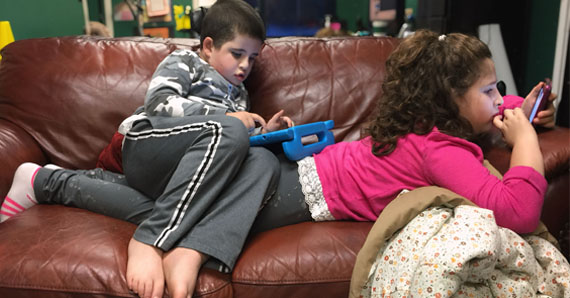
My son has what some might call “severe autism.” He has challenges in his life that will persist well into adulthood. All the fears that I had when he was first showing signs of delay have come true and then some. When I thought about the road ahead, it was both terrifying and heartbreaking.
I imagined who he would be at 13. Picturing a boy without the ability to articulate and, in some cases, understand, language was a worst-case scenario. Imagining the life skills he would struggle with long after the age deemed “appropriate” was also cause for panic.
Unlike his sister, who I eagerly anticipated seeing grow up, I dreaded it with Lucas. With doctors and professionals saying that the future outlook was chock full of catastrophic possibilities, I had no choice but to try to envision it.
Yet, his entire childhood was spent trying to envision a person he hadn’t yet become. The picture in my mind didn’t resemble anything like the person who sleeps down the hall from me. It’s a different kid entirely, even if certain issues I attributed to that imagined child came to exist.
There’s a reason why. Much like my daughter or any other child that any parent has, the flash-forward image in my mind wasn’t based on those personality traits that I contributed. The boy in my brain was a mixture of all other special needs children I had ever seen, whether in person or on television.
The only things I thought about when trying to predict his future were the challenges and struggles. They were the only concrete things I knew when he was still barely a toddler.
Doctors told me he might not talk or be able to do things at the same rate as other children. They gave us checklists and resources that all targeted these upcoming “disabilities.” The focus was almost always on what he wouldn’t be doing.
No doctor ever gave me a list that said, “he will love to hug and kiss you.” There were no resources about having a boy who found profound joy in life. Nothing on the Internet said that he would love me, laugh along with me, or show so much determination in reaching his goals.
No one could have predicted Lucas.

So I feared this age. I feared it because I essentially imagined raising someone else’s kid.
The futuristic boy in my mind ten years ago wasn’t mine. The thoughts I had about his struggles and my place in his life were all wrapped around a person who didn’t share any of my personality. It was a worst-case scenario placeholder played by a kid he was never going to become, even if the developmental issues were the same.
That is probably the most surprising thing that has ever happened in my life. To travel back now and try to explain that to myself would be almost impossible. I’ve thought about it and realize that the old me would never even understand what I was trying to say.
So he’s non-verbal? He never speaks?! All the things on this checklist are going to remain unchecked… well into his teens?!
Yes, but that’s still not who Lucas is. He’s more than the impairments. He’s a person who has been raised by me with all the love I have to give. Autism influences his personality, but it’s not all he is. He’s so much more.
I know that now, and I see it every day. Even autism itself isn’t the negative I thought it would be. I appreciate my son’s autism because of how it influences his entire demeanor. The purity of his emotions, raw understanding of his own needs, and straightforward approach to the world around him are all beautiful things to witness. They’re the things every parent wants their child to be – whether they are on or off a spectrum.
Much like his sister, Lucas is like having a mirror of my own personality, but through a filter I never could have imagined. treating my non-verbal son like he understands everything, even when I feared he didn’t He shows me who I am in its purest form.
For that, I’m eternally grateful. I never dreamed he would be the person he is now. That’s because life isn’t about dreams. It’s about reality. The reality is not his struggles, challenges, or some caricature my mind tried to create when he was two. He’s my son, not the “might-have-beens” or checklists I once feared.
He’s taught me that love isn’t about expectations. It’s about embracing who he is and celebrating all the ways he reflects the best parts of us back. In Lucas, I see myself – without the masks, without the pretenses, just pure love and determination.
READ NEXT:
treating my non-verbal son like he understands everything, even when I feared he didn’t
Hear James discuss this post and more on Friday’s Hi Pod! I’m Dad Podcast!
NEW PODCAST EPISODES ARE POSTED EVERY FRIDAY ON HIPODIMDAD.COM!


You must be logged in to post a comment.