
I’ve referenced the movie Poltergeist before, which I know is weird for a blog about autism parenting. But it is what it is. It all makes sense in context.
The ghostly comparison I made was about how my non-verbal son, growing larger by the day, likes to run at full speed into a chair or couch and launch his giant body on it. He pushes all the furniture against the wall and, to newcomers, it looks like a Poltergeist had been in my home.
While that’s my go-to joke about my constantly disconnected sectional couch and the cracking corner chair, Poltergeist actually fits easily into the theme of autism appreciation and the bond I share with my son.
In the film, parents lose their daughter to some interdimensional void. They spend the movie working with bizarre professionals and embrace new ways of thinking to bridge the gap between the family and their daughter.
If ever there was a symbolic movie for communicating with my non-verbal child, this is it.
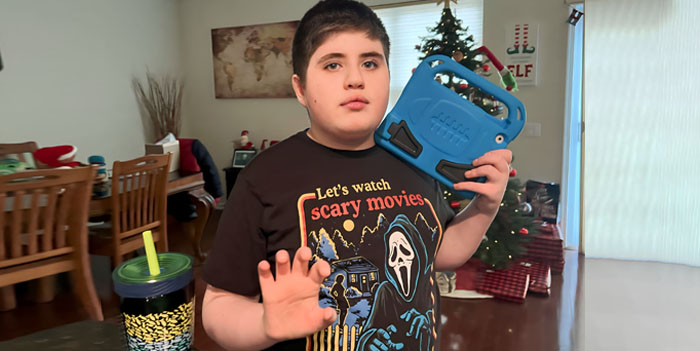
The reason I mention all of this is because it has always amazed me how many people hear that my boy doesn’t talk and immediately assume that he is left alone to be misunderstood. They’ll lament over how hard it is for him to be unable to express himself. They feel bad for me, as his father, for their perceived lack of relationship that must exist since my son can’t articulate words. They imagine an exact opposite scenario than the one taking place in our home.
For those people, I point to the movie Poltergeist and the message it sends (after the whole “don’t build your house on a haunted burial ground” thing). There is nothing that can keep a parent away from their children when they want to reach them. If these people are battling ghosts, I can learn some hand gestures and get him a communication device.
To be frank, I hate how some people assume that my son is just a person to be cared for. His needs, while more than most for a boy his age, are so overwhelming in their eyes that they envision me staring at him all day, waiting for whatever huge chore I have to do next. It’s perplexing and completely inaccurate.
Lucas is a member of our family. The fear that he might be “locked away” from us occurred in the earliest days. Over the past decade, we have all worked to understand each other. No family throws out a member that they want to be included. My son would never be excluded, no matter how “difficult” his challenges actually were.
I add the word “actually” because I’m not really sure how difficult these challenges, which have become a part of our routine, really are. Keep in mind, Lucas doesn’t have any words at all. He struggles with deeper meanings and expressing thoughts. There are some life skills that he may never be able to learn. We’ve accepted that he will most likely need help for the rest of his life.
Sounds pretty major, right? It feels major to write it all out.
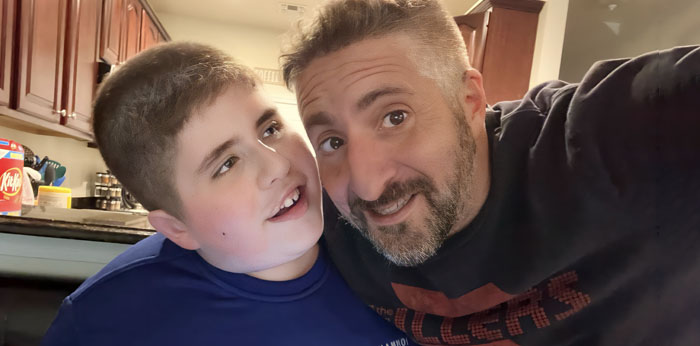
Then why doesn’t it feel major while we live it? Why does that list of obstacles feel less daunting in real-time?
Sure, sometimes it’s a lot to handle. There are days when things are rough with Lucas, but I have days like that with my neurotypical daughter. I have days like that with my own personal issues. Lucas can be challenging, but not on the level I would have expected from reading that paragraph and not knowing him.
The reason it doesn’t feel like a major thing is because we’ve made it work. We’ve made it work because Lucas is worth it. My son is a unique and special person in the realest definition. I have never met someone like him and the challenges are just a part of the overall amazing experience that comes from having him in our lives.
It’s why I write about autism appreciation and why, if I’m being honest, I don’t love it when people immediately spring to the negatives of a child like mine. I don’t care about conspiracy theories that imply having a non-verbal child with autism is some sort of punishment or war crime. People who talk about autism as if it’s the end of the world for a parent don’t know our world, don’t know my son, and don’t know what they’re missing.
Life is hard. It’s hard no matter what you have going on. It’s never so hard that you leave a loved one behind. Whether it’s a lack of speech or the wall opening up and swallowing him into a 1980s horror movie, there’s isn’t any obstacle on this Earth that would ever stop me from finding a way to either one of my children.
READ NEXT:
Autism Awareness Begins With Us
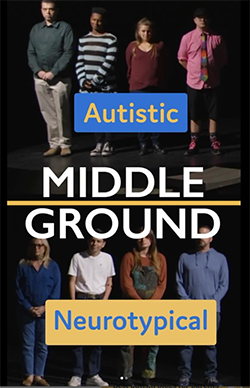
Check out my appearance on Jubilee’s YouTube Series “Middle Ground”

 Hi Blog! I'm Dad.
You must be logged in to post a comment.