


LISTEN TO THE FREE PREVIEW BELOW ON SPOTIFY:
A unique thing that comes with writing about my 14-year-old non-verbal son is the ability to go back in time and remember the early days. My goal in showing what life is like raising a boy with severe autism is to help those just starting on the journey understand the reality of it.
As you may have noticed, I’ve found that the fear of being a special needs parent never matched the eventual life we lived. Lucas is wonderful, and even though I am honest about the sheer amount of work it takes to keep him going some days, it’s all worth it. He’s my son and I owe it to him. Even beyond that, he deserves it. He fills my heart with love.
Writing about it, though, requires me to think back to the early days. What were my fears? What were my concerns? What was the life I pictured, and what were the most painful moments?
There’s a certain degree of honesty that this entails. That honesty isn’t just for those reading, but for me too. I need to put my cards on the table, be upfront about what they are, and deal them out, no matter how different they are from the cards I hold today.
One of the strangest ones has to do with those early anxious thoughts. I have to be open about what they really were, even if they were minor.
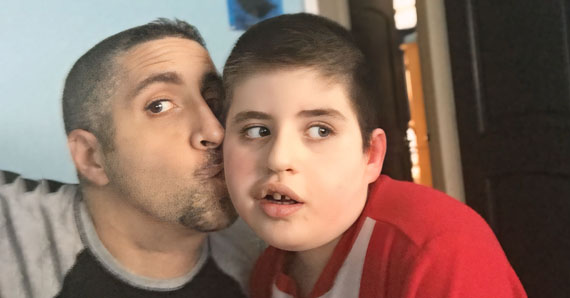
So, here goes. Danger? Sure. I was terrified of the danger that came with raising a boy like Lucas. How could I keep him from cutting off his arm or falling into the ocean? What would I do if he ran into the street or opened the car door while we were driving? You name the nightmare scenario and I dreamt it up.
You have to remember that, at the time, I was coming to grips with harsh realities. Having a non-verbal son was not in my probable future plans. So picturing him tumbling out of the backseat and onto Sunrise Highway wasn’t so far-fetched.
His schooling? His life skills? His potential to grow? They were all overwhelming sources of concern. Looking back now, I can recall them like they were yesterday. Some of them were yesterday. As Lucas’s dad, I still worry about many of these things.
There’s one, though, that has gone away. It’s something that, even looking back, is hard to remember. It was so early on, and with both Lucas and society changing in the last decade, I often forget it was even a thing, albeit brief.
I worried that people would mock him.

This is an unspoken concern that many caregivers to a boy like mine face. For most, it’s an intense thought in the initial days of diagnosis and fades away. Still, for a little while, it was a deep worry.
I’ve written about this concern from different angles. I imagined a world where I had to fight strangers for staring at my son. My imagination constructed elaborate Steven Seagal-style barroom brawls to defend Lucas’s honor. The worry sometimes felt giddy, as I wanted someone to say something. I dare you. I double-dog dare you.
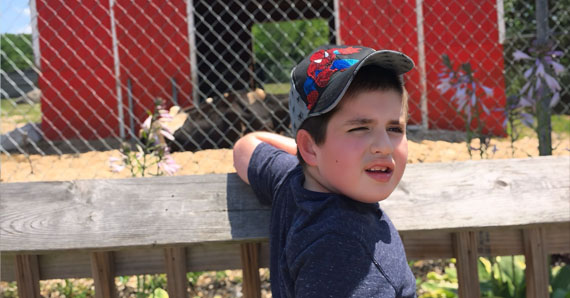
I scanned every public place I took him, searching for the upturned eyebrows. I wanted to hear a comment from someone who had a negative opinion. Battles were prepped for every morning. Every evening, I returned home without a single scrap.
Tomorrow, I’d tell myself, someone will say something.
No one did.
That might not be entirely true. They never said anything to me. Those upturned eyebrows and whispered comments could very well be happening now. If they do, I don’t notice. I stopped scanning the rooms. After a while of no one reacting to my son’s outbursts, stims, or random screams, I realized something about people. It’s a major epiphany that the younger version of me never would have believed.
People aren’t so bad.
Honestly. The world I imagined was filled with awful individuals, excited to mock a special needs child. The pictures in my head had entire neighborhoods pointing and laughing. Everyone is terrible, right?
No. They’re not. For the most part, people are accepting and encouraging. As long as I’m tending to my son and making sure he doesn’t bother others, they leave us alone. Even in the rare moments he might tap someone for one of their cookies or accidentally stumble in their way, people are understanding. Lucas is easy to love. Most people get it right away.
Does that mean that there are no terrible people out there? Of course not. They exist.
And they don’t matter.
The comments that worried me, if they ever happened, would only come from some of the lowest creatures on Earth. The type of person who would mock a child with special needs is so far down on the totem pole of life that it doesn’t matter. Sure, I might want to punch them for it, but their opinions wouldn’t matter to any of us.
Lucas is uniquely Lucas. Almost everyone sees it and appreciates the person he is. Even those in public who never knew a boy like him rarely have a negative thing to say. If they do, they keep it to themselves.
Anyone who wouldn’t is, forgive me for stating the obvious, garbage. They can stare across a room without anyone noticing. That’s because they don’t matter. Words only have power when they can affect others.
That’s why I don’t worry about what people think about my son. The ones who think good are all around us. The ones who don’t can keep it to themselves. I wouldn’t want to socialize with them anyway.
Lucas helps me weed them out.
READ NEXT: MY NON-VERBAL SON IS A TEENAGER, NOT “MENTALLY 6” – HERE’S WHY THAT MATTERS
Hi WORLD I’M DAD: How FaTHERS CAN JOURNEY FROM AUTISM AWARENESS TO ACCEPTANCE TO APPRECIATION
Audio – Digital – Paperback Available…Everywhere.
Get It On Amazon – Get It On Audible – Get It On Spotify – Get It On Barnes & Noble

NEW PODCAST EPISODES ARE POSTED EVERY FRIDAY ON HIPODIMDAD.COM and YOUTUBE @HiBlogImDad!Every Friday on HIPODIMDAD.COM, Apple, Spotify, Google, Amazon, Stitcher, IHeartRadio, Pandora, Tune-In, Alexa, Podcast Addict, Podchaser, Pocket Casts, Deezer, Listen Notes, and…Everywhere Pods Are Casted.
 Hi Blog! I'm Dad.
You must be logged in to post a comment.