
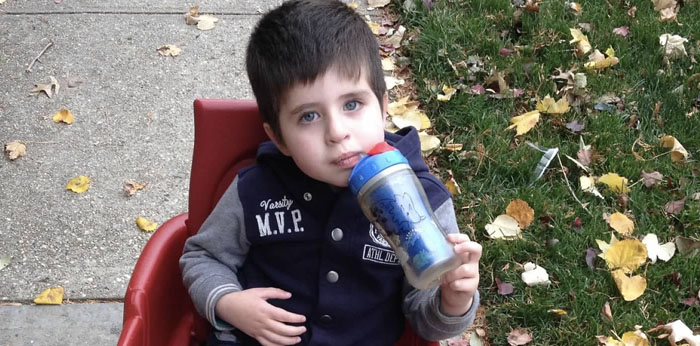
I know that it’s easy to read the positive things that I write about my 12-year-old non-verbal son with autism and see our world in a certain light. The way many might view it is that, as his father, I’m focused on all the good aspects and I always have been.
That may not be the most accurate depiction of our situation. Yes, today I most definitely see the positives first and foremost. Many of the concerns those without a child like mine feel they might have in my situation don’t exist for me. I don’t lament over missed Little League games or potential prom pictures that won’t happen. Those mainstream worries don’t cross my mind much, if at all, anymore.
The reason why these missed milestones aren’t even minor issues for me is because I accept who he is now and who he has always been. Since he was a baby, Lucas has been Lucas. We came to grips with the reality that Little League and Prom pics were most likely off-the-table. For me to be sad that he won’t have them today would be for me to be sad about who he is as a person. I know those things won’t happen because that’s not who he is.

There was, however, a starting point to all of this; before I knew who he was. When you have a baby, they come out fresh. The world is their oyster and everything is possible. Knowing your child might have, in our case, pronounced special needs doesn’t happen immediately. It takes a little while for the signs to start seeping out.
While they started early, they still took a little while to become evident. Think of all the milestones a baby growing into a toddler growing into a preschooler reaches. Now imagine that each and each one was met with a substantial delay or, in some cases, absence.
We worried he couldn’t roll over. As that became a focus, suddenly it was that he wasn’t sitting, then crawling, and then talking. One by one, the boxes remained unchecked and one by one, they all ate away at me from the inside.
As all of this is happening, you find so many things to be upset about. For me, it was never about embarrassment or even the potential to one day have to provide round-the-clock care. It was about guilt. It was about how I could have brought a boy into the world and handed him a life that, according to professionals at the time, could be incredibly hard.
Make no mistake, what many would see as the “worst-case scenario” came true and there are parts of his care that will require assistance for the rest of his life. Still, that wasn’t the issue. It wasn’t about the difficulty of helping a person I would help do anything he ever needed. That’s the second nature of parenthood. The issue was how I could watch one of the people I love the most “suffer” in life.
I don’t think Lucas suffers, just to be clear. Back then, though, I thought he would. Not only was that guilt put on my own shoulders, but others inadvertently placed it there too. People asked intrusive questions about what I did or didn’t do that may have caused it. Between feedings, environmental aspects, and family history, you’re grilled. It’s hard to escape a conversation like that without beating yourself up.
Making matters worse? These people were asking so that they didn’t end up in the same boat. These “loving” family members and friends were keeping a checklist of their own to make sure they didn’t have a kid like mine. There was always a simmering resentment under the surface for me during those impromptu moments of questioning.
It hurt. It hurt because I knew he was a great boy. He didn’t do all the things I expected, but I loved him. I wanted the best for him. I wanted to be OK with it
Thankfully, I accepted reality early. I knew that the alternative would be to miss out on the joys of having a son. Sure, Lucas wasn’t the type of kid I expected, but he was mine. He was and is unique. I wouldn’t trade him for anything.
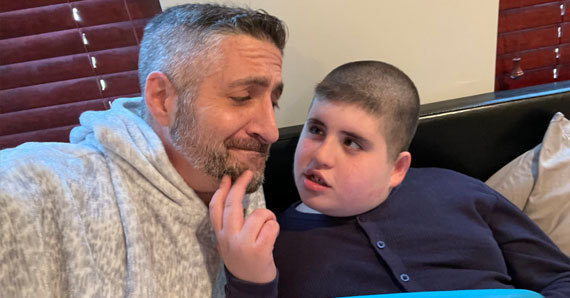
Do all parents feel that way? No. In the words of one mom, who had a boy much like mine, at the time:
I’m not okay with this. I’ll never be okay with this.
I remember hearing that and having it hit me deep inside. I didn’t want to be like her. I couldn’t be like her. Lucas and I both deserved better than to view his existence as a painful experience. That wasn’t healthy and it wasn’t reality.
The moral of the story here is that these things take time. It’s alright to beat yourself up a bit when they’re young. It is OK to worry or feel guilt. It’s even acceptable to have those moments wash over you as they grow up. Being a parent isn’t easy and being a loving parent has some built-in pain to handle along the way – whether you have a kid on or off the spectrum.
What’s most important is to remember that this is the child you have. What Lucas does or doesn’t do is what Lucas does or doesn’t do. Complaining that he won’t catch a touchdown or understand certain things won’t make it change. All it will do is take this precious gift I was given and make me miss out on it all because I’m too busy crying over who he’s not, rather than who he is. I didn’t want to do that. No parent should.
Fear for your child. Worry for your child. But, above all else, love your child. If you spend the rest of your life with denial and tears in your eyes, you’ll miss out on one of the most important people the universe could ever give you. I’m glad I didn’t.
READ NEXT:
From Meltdowns to Mischief: The Lighter Side of Autism

 Hi Blog! I'm Dad.
You must be logged in to post a comment.