

In 2017, I began writing about my then-six-year-old non-verbal son. Many of the posts I came across during his earlier years didn’t share the enthusiasm and excitement I came to experience when raising him. Their tone seemed a bit downtrodden and worried me for a future that I so desperately wanted to be excited about, so I set out to make my own.
Fast forward to today and my 13-year-old son is still non-verbal. He still has autism and still struggles with many of the life skills that other parents of kids his age take for granted. Arriving at a destination requires an extra five minutes to put his shoes back on as he squirms around the backseat of my car – that sort of thing, among others.
Knowing all this to be true and understanding the unique nature of our family’s life, I still write these posts for the person I was before seven years ago. I wish that version of me could read then what I’m writing now. Because of that, many of my articles are aimed at the parents standing on the edge of uncertainty.

Before the first time I put my fingers to the keyboard to share stories of Lucas, I remember the sense of desperation I felt. Any professional, from doctors to teachers, was begged for a glimpse into the future.
They’d tell me that he was on the spectrum and I’d ask them what that meant for the long term. Will my son be a member of the family? Can he ever understand basic ideas? Will he speak? Does he love me? Will everything be OK?
Every shrug and “anything can happen” sent annoyance down my spine. It was as if no one could sense my pain or feel my need for answers. I blamed them and dreamed up all sorts of nightmare scenarios for an uncertain future. Why couldn’t anyone tell me if everything would be alright when the road to adulthood truly began?
Was it their fear of being sued? Did they think that giving me reassurance would come back to haunt them when he eventually didn’t meet my unrealistic expectations? Those were the actual thoughts that bounced through my frazzled brain.
In all actuality, they couldn’t tell me because everything being “fine” is an abstract idea. They don’t measure contentment on a CARS test and there’s no “happy family” checkbox on an IEP. None of that can be measured by anyone aside from the parents themselves.
So, that’s where I come in. If you’re reading this and desperate for someone to tell you whether your young child, struggling with understanding, will be alright, I’m here to provide answers.
They will be. Everything is going to be alright.
There are many reasons why I can give that assurance with 100% certainty. For starters, you are online searching out articles in hopes that your child will be OK. I did the same thing. It tells me that you, like me, are looking to find the answers when you don’t have them. You’re willing to ask for help and admit truths that some moms and dads hide their heads from. You want the best.

Also, “fine” is a matter of personal perspective. If you are the type of parent who can disregard your kids, you won’t be fine. If you can judge, dismiss, or pack up and disappear, you won’t be fine. But let’s be honest, a parent like that wouldn’t be fine even if their kid didn’t have autism.
Parents like that create their own misery. If you’re that kind of person, you’re not here reading this with any hope of finding solace anyway. You’re off trying to find ways to escape your responsibilities.
Raising any child is hard work. That’s true and knowing that definitely makes things easier to digest when struggling with a diagnosis. There is, however, another layer to that which isn’t so easily stomached.
Raising a non-verbal child is a lot more work in some areas. The challenges are unique and moments of loneliness are real. Friends won’t always understand. Your worries and concerns will lead to internal guilt and pain. Your more-than-routine obligations to this child will stretch beyond the timeline you expected on the day they arrived.
Take that in and know that nothing I’m saying today is sugarcoated. The road ahead isn’t easy, but it’s a journey you’ll take with a person you love. That’s what makes it smoother to navigate this daunting path.
Lucas doesn’t speak and his 13th birthday, while overwhelmingly beautiful, had a few bittersweet moments for me that no one else knew about. There are things I want for his future that won’t happen and skills that I wish he could acquire, but accept that he might not.
Yet, I love him. In fact, I love him more now than the day I first saw him. My love for Lucas grows with each passing year and, as we get to know one another throughout his life, I know that it will only increase our bond. He’s my boy and he always will be. I love him like I love his sister. I love him more than I love myself.
This brings me back to all those questions I once had that no one could answer. Is my son a member of the family? Very much so. Can he ever understand basic ideas? Some yes, some no. Does he speak? Not a word. Does he love me? Absolutely. Is everything OK? No…
It’s perfect.
READ NEXT:
Beyond Screens: My Non-Verbal Son’s Depth with Gesture-Based Communication
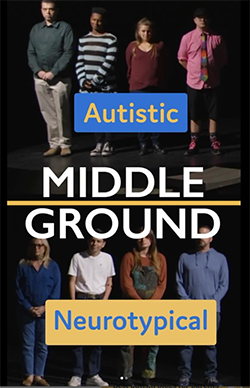
Now Posted: Check out my appearance on Jubilee’s YouTube Series “Middle Ground”

 Hi Blog! I'm Dad.
You must be logged in to post a comment.