
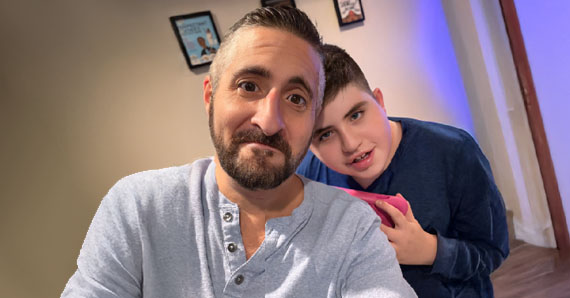
I worried about becoming a father when I was younger. The thought of raising another person and being able to steer them in the right direction was somewhat terrifying. I had no idea if I could do it.
My life wasn’t always full of the most positive of reinforcements and, as you grow, those words of discouragement add up. You take them to heart and believe the worst in yourself. Even if you come to realize that they came from a place of malice, they still can weigh you down.
Because of that, I had self-doubt when my daughter was born. Neurotypical and quite smart, my little lady was doing great from the start. She gave me confidence in my parenting that I hadn’t known before. I could do this. I was a superstar. Bring on another kid. I’m knocking this out of the park.
But when Lucas arrived, the journey was different. Suddenly, the park seemed to get much bigger.
My son is non-verbal with autism and, at 13, his special needs are easily understood. For me, as his parent, and for others who meet him, Lucas is sweet and kind. He also demonstrates areas which he needs assistance and it’s not hard to know when he might require help.
The funny thing about raising a non-verbal child, though, is that there’s no starting gate. Doctors don’t say, “Oh, when he’s 17 months and four days old, you’ll listen for a click. If you hear it, you’ll know your child can’t speak and will need special education.”
Nope. No click. No check engine light. Nothing. Like his sister, my son just started to grow up. Unlike his sister, milestones weren’t coming along like they did in books. We just sort of waited.
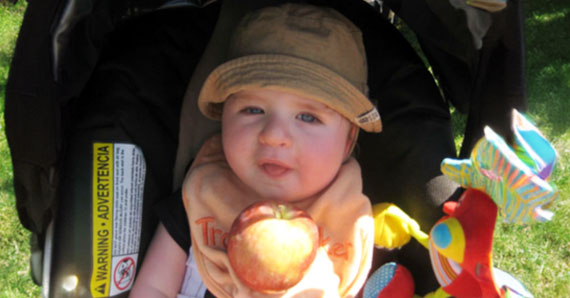
How long do you wait? No one could tell me. I listened for every hint of a word. A sound effect with his throat would become an “Uh, huh” in my ears. A yelp would come out like the word “no” and I’d go wild. Every slight possible word was gripped onto with tenacious strength.
When people asked if he spoke, it felt like a personal attack. Questions everyone asks of new parents felt insulting in their nature. Does he like school? What does he call his sister? Is he excited about Santa coming? They all are basic things we say to keep the conversation going. When people said them to me, I wanted to run from the room screaming.
I didn’t know. I had no answers for anyone, and no one had answers for me. All I knew was that time was ticking by, everyone wanted to know if he was talking, and I had nothing to tell them.
People meant well when they offered advice or anecdotes, but over time, these comments added pressure and a sense of inadequacy. At first, I would hear, “It’ll be fine. There’s still time.”
Then, I’d get stories about someone’s cousin’s kid who spoke at 9, or an anecdote about late bloomers. Later, though, the advice started to get heavier. I heard about new-age remedies from people I barely knew, similar to comments I delete from our social media pages.
And that was the big issue. These questions, the advice, and the slow passage of time all made me feel like a failure.
So , how could I, um, unfail him? Teach him language, of course. If I could just do that, “everything will be ok”. In my mind, allowing my son to reach his teen years without traditional words, would be me failing him.
If you’re one of those parents, thinking that right now, allow me to be the friend who’s not offering advice or remedies. Instead, I’ll offer some reality.

Kids with special needs are people. You can help them learn things, but you can’t make them learn things. If there’s something inside of them that won’t allow them to speak, sometimes that’s the way it is. If your bar for failure is resting on a ledge that you have no control over, you’re setting yourself up for disaster.
The fact that my son doesn’t speak isn’t because I failed him. All the work we’ve done through the years – and we’ve done a lot – has brought him to a place much higher than he would have been otherwise and I’m so proud of him for it. I might not have taught him to talk, but I’ve taught him to become the strong, caring, and kind teenager he is now. The goal is for him to become a viable member of society in adulthood and ensure that he becomes everything he’s capable of becoming.
That’s the measure of success. It’s not about individual milestones or checking boxes on birthdays. It’s about the big picture and finding your child’s true potential. We’ve done that.
It would be easy to end this by saying, “language is overrated,” and in some respects, it is. But more importantly, it’s a part of our journey and a goal that exists within the broader purpose of seeing Lucas reach his unique potential.
The only failure I would ever have as a father is if I gave up trying. That’s something neither of us have done or ever will.
READ NEXT:
Unseen Lessons: How My Non-Verbal Son With Autism Became A Little Gentleman
Hear James discuss this post and more on Friday’s Hi Pod! I’m Dad Podcast!
NEW PODCAST EPISODES ARE POSTED EVERY FRIDAY ON HIPODIMDAD.COM!


 Hi Blog! I'm Dad.
You must be logged in to post a comment.