
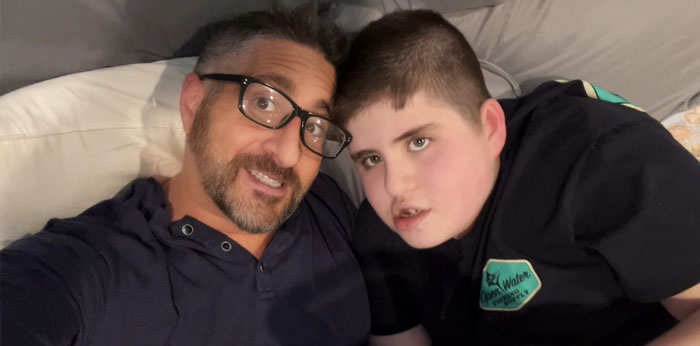
Waking up exhausted after a long night can drastically impact my day, often leaving me irritable as better-rested people talk in my face about nonsense while I guzzle coffee.
These groggy mornings were once a badge of honor in my youth, often following nights of memorable adventures. However, as I’ve aged, the reasons for my fatigue have shifted from lively evenings to late nights spent on YouTube or Netflix, a gradual slide into the pit of malaise.
One advantage of growing older is recognizing when to call it a night. This understanding didn’t come easily or quickly. It took years to realize the importance of good sleep habits, making me an unlikely candidate for advising others on rest.
Ironically, fatherhood thrust me into the role of managing someone else’s sleep. With my daughter, enforcing bedtime often involved a predictable cycle of protest and persuasion, with Dad’s insistence on sleep eventually prevailing. It’s simple and basic parenting 101.
Then, as with most of my parenting stories, there’s Lucas.
My little ball of energy is just shy of his 13th birthday and non-verbal with autism. In the traditional sense, there’s no debating with my son. He doesn’t argue with words, yet he’s stubborn in ways that every child his age would be.
Because of that, Lucas’s bedtime has gone through periods of fluidity. There were many nights when he, with an iPad in hand, was clapping and screaming way past an acceptable time. The general idea was that he was obviously “not tired.” Why force him?
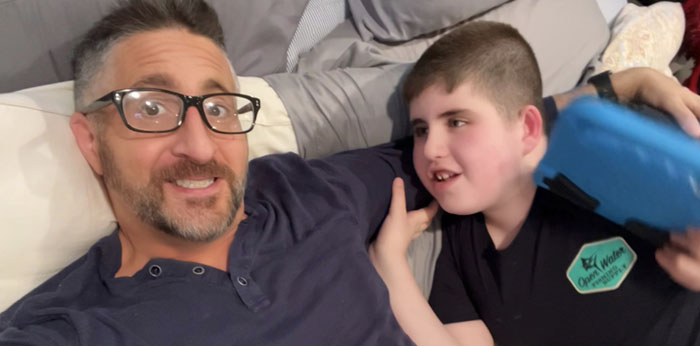
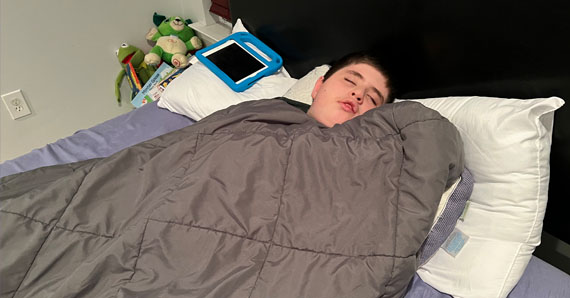
After all, he knows when to go to sleep. We’ve had company over, and my boy would disappear like Batman. I’d go into his room to find that he had climbed into bed and tucked himself in. I’d see him fast asleep, say “Aww”, and snap a picture.
So, yeah, he knows tired. Why make him go to bed at 8 or 9 or even 10, especially when he still has enough energy to clap and scream with glee?
I’ll tell you why. It’s because the next day, he’d become a monster.
Notes from teachers would talk about his unwillingness to “transition” to the next activity or stay awake. He’d be grumpy and difficult. Even with their overly happy notes, they’d say he had an “OK day”. That’s code for “your kid terrorized a room full of adults today.”
When I moved out and began splitting my week with the kids three years ago, I made it a point to stop having “OK days” at school for him. Lucas has such a jovial demeanor. What could I do to eliminate these tough times in the classroom?
What you need to know is that during his manic midnight moments, it feels like getting him to close his eyes will be impossible. He’s cranked up to 11 and hollering like a 1960s girl at a Beatles concert. You can’t even picture him lying down, much less sleeping. You feel helpless as, in many cases, a person with wired energy is usually a person who’s not tired.
The truth, however, is that he’s secretly exhausted. I know this because once you figure out how to lead him to dreamland, he’s out immediately. In just seconds, not minutes, he’s done. His screaming and laughter, normally signs that someone is wide awake, are actually major signs of his exhaustion.
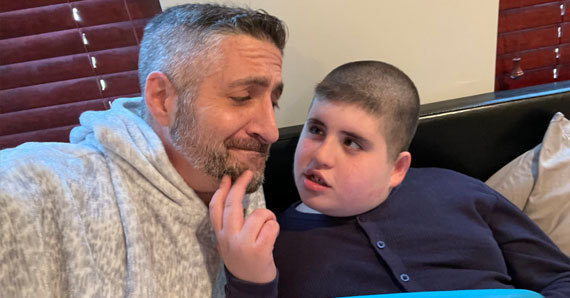
I know many people reading this will suggest that I lay with him during these times. That works for many children…but not Lucas. Laying with him in bed has the opposite effect. He’s so excited to have someone there that he spends the entire time sitting up and looking at me lovingly. He puts his finger on my chin turns me to face him and laughs. It goes on forever. As cute as it is, it sort of defeats the purpose.
What I began doing was counting down to his iPad. I stand in his doorway with five fingers and call out…
Lucas. Five…four…three…
At this point, I get an idea of whether he’s at that exhaustion point or simply having fun. The best response is when he simply hands it over to me. However, if he has a negative reaction, I give him 10 more minutes. When I return shortly after, he gives it right over. That’s when I put on his Raffi concert.
Good old Raffi has been the background music of my boy’s entire life. We’ve seen these concerts millions of times and, since he was 3, he’s fallen asleep to them. So that’s what we do. Baby Beluga, baby. It always worked.
“Worked” – notice that past tense? That’s because recently, I’ve seen that it too has been having the opposite effect. I hear him clapping and dancing in his room. Checking the camera, I’d see that he’s up, turned his lights on, and standing inches from his TV excitedly screaming.
Talk about being thrown for a loop. That’s when I have to be the bad guy. No more.
I enter his room, turn the lights out, and TV off, as he looks up with a stunned expression. Then I declare the start of bedtime with a phrase that he has come to understand quite well.
Head on the pillow.
And he does. With a press of his music box, he lays down as lullabies play out. I give him a kiss and leave. Literally, less than a minute later, he’s asleep and we’ve saved the day for tomorrow.
The major difference between my son and daughter is that he doesn’t have the words to tell me he’s tired. In fact, his overstimulated reaction to having his device into the wee hours of the evening can mask that fact. From one glance, you’d never know how done he truly is.
Dad knows, though. Whether it’s hunger or sleep, I need to anticipate his needs when he’s unable to tell me. That doesn’t always mean a lack of language either. Sometimes he can’t articulate his needs because he doesn’t realize them. There’s no voice in his head telling him that he will feel better tomorrow if he sleeps now. No. The voice is telling him, “Yeah baby! iPad for life!”
So, I’m that voice. It’s a big responsibility, but one that I will gladly take on to ensure that his “OK” days turn into great ones.
As Lucas’s father, I’ve learned the importance of being more than just a caregiver. I’ve become his interpreter, understanding his unspoken needs and desires. It’s a role filled with trials and triumphs, one that teaches me patience, empathy, and the profound depths of non-verbal communication.
These bedtime routines aren’t just about ensuring he gets enough sleep. They’re about creating a space of comfort and security. It shows me that I can sense his needs and provides him with the knowledge that his dad will always steer him in the right direction, even when he’s not sure what that direction might be.
READ NEXT:
Mirroring Positivity: How My Son with Autism Reflects My Behavior
Now Posted: Check out my appearance on Jubilee’s YouTube Series “Middle Ground”



 Hi Blog! I'm Dad.
You must be logged in to post a comment.