
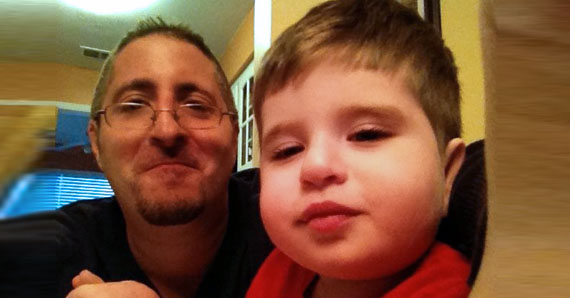
As the parent of a special needs child, I have a confession to make. It’s actually a real confession and not a cutesy way to start an article. It’s something that legitimately makes me feel shame in some aspects, but also one that is rarely spoken about.
When my son was little, just emerging with his delays and autism diagnosis, I had a very hard time being around other children his age.
I didn’t want to feel that way and, honestly, I didn’t act that way. I still gave other people’s children fist bumps and high-fives. I called them “champ” and “slugger.” I endured all their knock-knock-jokes and songs about chicken nuggets. I played the game that adults often play. I smiled like I meant it and pretended all was fine.
All, however, was not fine. At the time, it felt like Rome was burning around me. My son was struggling to balance and still not saying a word, yet a kid his age is standing before me and doing a magic trick.
Pick a hand.
Go to hell.
The worst part about those times was that they usually came as a surprise. Spending every day with my boy, I saw him as the example of what a four-year-old should be doing. Even at that young age, his mannerisms had already become routine in our home. These jarring actions and loud screeches to outsiders were just part of our world. He was a “typical” preschool child in our home, because there were no other children his age to compare him to.

When a friend or relative would come over with another four-year-old, my brain wouldn’t register the exact type of kid that would be arriving. In some cases, so much time had gone by since I saw this family that I assumed their child was doing a few things here and there, but not much more. My mind told me that Lucas’s delays were slight. He might not speak, but he could still “catch up.”
Then someone would come over with a little boy by their side. Smiling, clean, and standing still, his parent would tell him to say hello and he would.
Hi.
It wasn’t the word that threw me. It was the natural way in which he said it. I still remember that. That one “hi” was delivered very matter-of-factly. There was no struggle to get it out. There was no stimming actions surrounding it. He made eye contact, just as my son did, but he didn’t become distracted or look away. I couldn’t help but see all that he wasn’t doing.
Somewhat stunned, I’d offer a casual pleasantry.
Hey little man. How do you like school?
And that’s when the torrential downpour began.
I like school. My friend is in my class. My teacher’s name is Beverly. I play on the jungle gym.
Explosions would go off in my head. All I could think was, “I can’t believe kids my son’s age are doing this. I can’t believe how far away we are off from the checklist.”
Keep in mind, I didn’t resent the progress of other children. I was just shocked and felt that my own child’s struggle to reach that level may have been my doing. The guilt and shame I felt over my own child was compounded by the confusing way my brain was handling this other kid’s successes, which I was happy for….yet conflicted.
And that killed me. I know there are people reading this right now who are currently experiencing this gut-wrenching situation. It’s the occasional reminder that the love we have for our children during these roughest years can sometimes cloud the view that the outside world sees.
After all, even though he was getting on in years, I was still thinking my boy’s verbal language was right around the corner. People would share stories about how their cousin didn’t talk until five or whatever. Little bits of hope that we might still be wrong seeped in. He might just be a late bloomer, right?
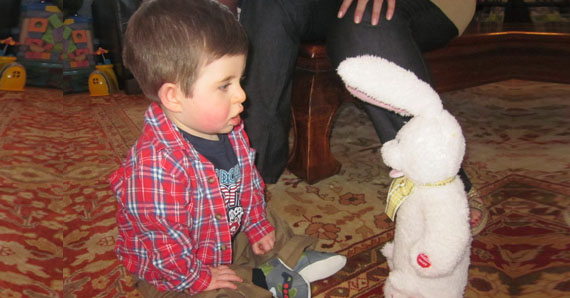
Seeing these other children would remind me that reality is reality. Lucas had some substantial delays and, sooner or later, you had to stop calling them “delays”. You know who taught me that in an awful way? Judge Judy. Honestly.
I was cooking dinner and watching YouTube on my iPad one night. Lucas was just about five years old and waiting in the living room with his sister. My mind was drifting into nothingness as Plaintiffs and Defendants incurred Judy’s wrath.
One of the litigants had her son with her and, although it would be better for the story, I can’t remember what the case was about. To my best recollection, it was about babysitting expenses. Let’s go with that. The Judge asked the mom about her child.
Does he talk?
The mom said “no” as she flipped through papers. That’s when Judge Judy punched me in the stomach.
Madam! If your son is five years old and doesn’t talk, that is more than a delay!
We have just lost cabin pressure. Dinner is served.
People throw the word “accept” around a lot. The idea is that non-acceptance is done to be cruel. It is an exclusion of people with autism because they don’t fit into our version of things. It sounds horrible because it is horrible. Autism Acceptance as a society is different than a parent’s acceptance of that word.
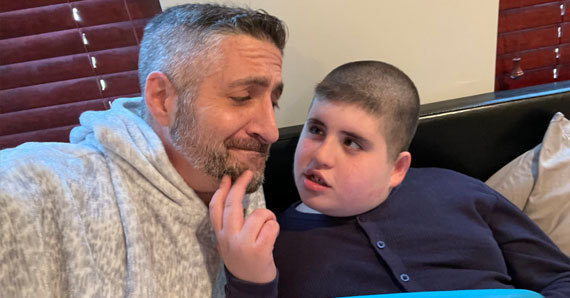
The struggle parents sometimes have with autism acceptance isn’t the same kind as the rest of the world. Their form isn’t cruel. It’s due to a lack of exposure. Seeing my son, still not speaking at four, didn’t register fully until I saw the progress of another kid his age. It was what made it so hard to accept or, in some cases, even see.
To put it simply, you don’t know how far behind you are in a race until you see how far away the person in front of you is.
Keep in mind, the fact that your child might be non-verbal isn’t something you learn early. No one tells you, “He’s not going to talk.” They tell you to wait and see. They say it’s a process. They don’t give you an expiration date.
That was on the verge of happening every single day for years. We wait, wait, and wait some more. You accept, but you don’t give up trying to teach the things that are still left unlearned.
I mentioned people reading and going through a similar time right now earlier. If you’re one of them, I have good news for you. That race isn’t a sprint. It’s a marathon. Children are judged on milestones and birth charts when they are little. During those times, lack of speech or other skills is the cornerstone of whether a kid is adjusting to the world.
As they get older, that cornerstone changes. It becomes about who they are and their personalities. In that department, my son has everybody beat. Language might be absent but his spirit and disposition are above anyone else. Now when I meet other kids his age, I don’t think of the things they can do that Lucas can’t. I think of the person Lucas is that they’re not.
READ NEXT:
FROM AUTISM AWARENESS TO AUTISM ACCEPTANCE TO AUTISM APPRECIATION




You must be logged in to post a comment.