I don’t ignore my feelings. I feel them. I express them. I learn who I am because of them.
Have I always been that way? Not really. Like most men, I let a lot of that build up in my mind and in my chest. I stored a lot inside and, eventually, my heart told me to stop.
I mean that both figuratively and literally. At 35, my body interrupted a conversation I had spent years avoiding. A heart attack changed my outlook. So did the love I had for my children.
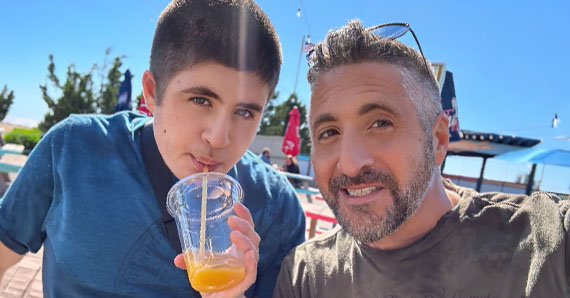
The truth is that raising a non-verbal son with autism would have been next to impossible without a sense of emotional honesty. These blogs that people remark on for their openness have been a natural extension of the father I needed to be and the man I became.
In those earliest days of Lucas’s struggles, I spoke to no one about them. Family didn’t understand. Friends didn’t notice. I was an island to myself, and I spent my downtime doing what a lot of men in their early 30s might do in that situation.
I played Call of Duty on Xbox whenever I had the chance. The rapid succession of breaks and gameplay helped mask any thoughts before I could process them.
What was I afraid of? That’s not a question without an answer. It isn’t some hypothetical where we laugh at my misplaced worry. It’s something I can itemize for you.
I was afraid to think about the future. I couldn’t imagine what Lucas would be like as a nonspeaking adult. Still at a toddling age where language could emerge, we could hide our deficits in plain sight. People would remark that he “was just tired.” They’d give me an out before I could even say the word “autism.”
As a teenager, it would be impossible to hide it. Trying to picture what that world would look like ten years ahead of time was both terrifying and confusing.
So I played video games.
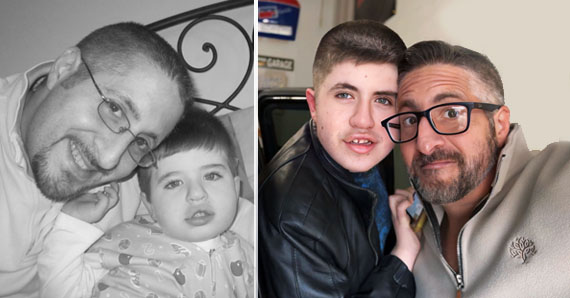
There was the guilt. I beat myself up over every shortcoming either child faced. Their struggles were not only my struggles, but my responsibility. Neither kid asked to be born. I made that choice for them.
In terms of my daughter, guilt was traditional. Every parent to a neurotypical kid is familiar with parental responsibility and how the slightest misstep can cause a mental barrage of self-doubt.
When it came to my son, though, the guilt was unbearable. That boy was mine and I had brought him into a world that, in those early days, seemed to have unlimited heartache ahead. I gave him this difficult life. I did everything I could to stop that thought from permeating my brain.
Still, it did so in a painful and constant manner.
There was frustration over being unable to answer questions. Paranoia over the thoughts of others who were saying things without saying them. Rage over advice from those who didn’t know what life was like in our home. There was no shortage of feelings I didn’t want to feel.
Had I kept all that hidden away, a few things would have happened. First, I probably would have died.
I mean that literally. That heart attack in 2012, followed by a surprise quintuple bypass, was the culmination of all that I was using video games to avoid. As one doctor put it, “You know those guys who walk around healthy and then drop dead of a heart attack at 40? That was going to be you.”
Let’s say that never happened, though. Let’s say I had the heart of a lion. Ignoring my feelings and refusing to address them would have done something far worse than any cardiac event could.
Ignoring my feelings would have led to me failing my son.
Fathers who can’t address the basis of how they see things can’t address the reasons their children might need them. If I had dug my heels in and told myself “everything is fine,” how could I have accepted and understood the issues Lucas so desperately needed my help with?
How could I tie his shoes and help him face the world if I was raging over how he was big enough to tie them himself? How could I guide him through the world if I didn’t understand what that even entailed?
Men are given an out almost from the start. If we make money, fix the fridge, and mow the lawn, everyone applauds. Show up to one parent-teacher conference and everyone throws a freakin’ party.
We’re almost encouraged to ignore our fears and worries. People don’t want to hear it. Friends don’t regularly offer advice. Most of my text messages from the guys I’m closest to are about pro wrestling.
I get that. No one needs to know my deepest thoughts. The only one who really needs to know them is me. The people who benefit from that approach are my children.
For that reason, I face the scariest thoughts head-on. I feel all the feelings I can in order to know who I am. I don’t play traditional macho to impress people who aren’t paying attention. I am my truest self to help the people I love.
My nonverbal son feels his feelings stronger than anyone I know. He’s been my guide in that respect. He shows me how to be the person I need to become in order to help him through life.
I spent years avoiding feelings because I thought they made me weaker. Instead, they taught me who I was. Somewhere along the way, they taught me how to become the father my son needed too.
Looking for a speaker who talks about parenting, connection, and reframing expectations?
You can book James Guttman here.
If this story resonated with you, I talk more about topics like these on
Hi Pod! I’m Dad.
READ NEXT: 45 Pieces Of Dad Advice For The Children


You must be logged in to post a comment.