
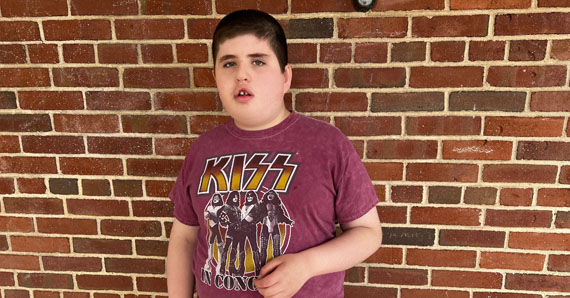
Autism is a complicated subject for many people. It’s a spectrum that is different from person to person. The whole concept is riddled with myths and false characterizations from TV and movies.
As the parent to a non-verbal boy with autism, I know how hard it is for some to understand specifics from our lives. Even I, when my boy was first diagnosed, couldn’t fathom how he had autism. Between the eye contact, hugs, and lack of sensitivity to lights or sounds, Lucas felt like the opposite of all they said it was supposed to be. I yearned for someone to break it down for me.
For that reason, I get the simplification that we all try to do to educate others about autism. We call it a puzzle piece and share memes. The ways we speak and the words we use try to take a deeply complicated and individualized subject and put it into one single-serve, easily-digestible blue capsule.
I don’t have a problem with most of that. I get it. If we want to gain autism appreciation, we need to find autism acceptance. Before autism is accepted, we need to make people aware. Breaking down the intricacies of a boy like mine into smaller explanations or catchphrases might make sense from a branding perspective. Light it up blue, fella. You know the deal.

What I do have a problem with is something that few people ever really talk about. They don’t talk about it because, well, it is kind of touchy. Even now, as a parent to a child with autism, I feel uneasy about voicing it. I know that the people who say it, often those with children on the spectrum themselves, aren’t doing so out of malice. Yet, it still makes me cringe. It’s something we have all heard many times.
One of the first times I encountered this was when my son was very little. I was speaking to someone who had a child with autism. His child was similar to mine, but older. I listened as he over-explained it.
I have a boy who has autism. He is 14, but he is really three. Mentally, he is three. Although people see a teenager, he is three. That’s who he is. He is a three-year-old.
He repeated it persistently. My assumption was that he was used to telling those without special needs children, so he made sure to stick the landings. Me? I have a boy with autism. Even then, I knew the whole, “He’s this age, but not really” speech. Yet, it bugged me.
Today, my son is twelve years old. He’s a big beefy boy who could barrel through an endzone. We share shirts, although he’s growing out of them, and he still has me maneuver him like a boy half his size. That’s him. He’s my little gentle giant.
Basically, Lucas is twelve years old. If you see him, you see a twelve-year-old. But really…
He’s twelve years old.
That’s it. No hidden age. He’s twelve. Does he do what many other twelve-year-olds do? Mostly no. Then again, what do “most” twelve-year-olds do? My daughter was twelve a few years ago and her class was teeming with neurotypical kids who were as diverse as you could imagine. There were girly girls primping their hair, boys running around the schoolyard screaming, and kids who ate bugs. What is a “normal” twelve-year-old, if not just a person who lived on the Earth for twelve years?
That’s my boy. He’s lived twelve years. End of explanation.

I don’t ascribe a mental age to him in order to help strangers “get it”. He’s not five, although he might like some of the same TV shows a five-year-old does. Then again, I have friends my age who watch cartoons. He’s not two, even though we might still read the same books he did then. Then again, I read them with him and get hyped up about it. He’s not a different age. He’s not anything but himself.
Not only is that comparison somewhat insulting, but it’s not even correct. He does his own thing and they don’t necessarily line up with things a younger person might do. That’s a major form of oversimplification. His stimming, screeching, and hand-clapping aren’t things a preschooler would do. They are things that Lucas would do.
In fact, Lucas even does “typical” twelve-year-old things too. He gets bashful around girls and tries to stay up late. He doesn’t like to be bothered when he’s busy and he even puts on his own deodorant. He’s a boy. He’s a twelve-year-old boy. In our home, this is what twelve looks like.
Could there possibly see some sort of clinical way to determine his “mental age”? I don’t know. Maybe, but that doesn’t affect me. That’s something for professionals in an office, not his dad in the den. My son’s autism isn’t a magic spell to make him mentally younger. You’re watching too much Mork & Mindy. Just because he has autism, he’s not one age on the inside and another on the outside. He’s him.
You can be a twelve-year-old with different likes, needs, and tendencies without having to be compared to another person or age group. It’s not right, acceptable, or even accurate. To say my son is “really” seven as I’m helping him shave his pre-teen mustache hair is insane.
If you really want to know who my son is, he’s Lucas. Sit with him. Meet him. Get to know him. I guarantee you never met a twelve-year-old like him. You’ve never met an eleven-year-old like him either. Ten too. Nine? Sure. He’s different than nine-year-olds. Eight? We can keep going.
My son doesn’t need to be put into a category. He’s his own person. Whatever age he grows to be will be the age he is. Today, he’s twelve. But he’s really…
The best twelve-year-old boy I know.
READ NEXT:
FROM AUTISM AWARENESS TO AUTISM ACCEPTANCE TO AUTISM APPRECIATION


 Hi Blog! I'm Dad.
You must be logged in to post a comment.