I do a lot for people. We all do.
We work jobs to feed our families. Those jobs typically produce work that others can use. Whether we serve food, write articles, or building skyscrapers, others are benefiting from our labor.
It creates a strange symbiotic relationship where the worth of a person is typically measured by what they can do for us.
Then comes Lucas.
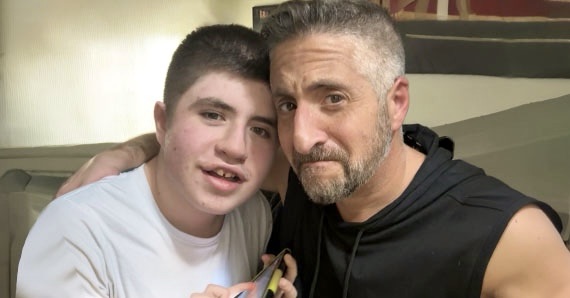
My son is nonverbal and has profound autism. He doesn’t work and, despite our best efforts, there is a chance he might never be able to. He can complete some tasks, but at 15, there’s still much more learning to go.
In fact, much of his life exists in a bubble. My boy enjoys his life. He plays on his iPad. We go to the pool. We see friends. His world is full of love and acceptance.
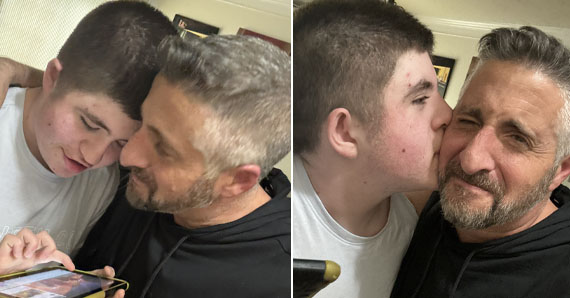
To me, he’s the world. My relationship with my son is the most unique I could ever imagine. In all my years, I’ve never had a bond with a person the way I have with him. I get him. He gets me.
It’s like having a friend across the room during a cringy work meeting. One glance. One expression. One silent connection. You can pass a message across worlds without a word. That’s me and Lucas.
So, to me and others who know him well, Lucas massively contributes to our lives.
But for strangers? Outsiders? The world in general?
He’s got nothing for ya.
And he might never.
And that’s OK.
People need to understand this because I’ve seen some frightening scenarios where they don’t. At the risk of sounding overly blunt, I’m going to be overly blunt.
My nonverbal son doesn’t owe anyone anything.
The only person you could make an argument that he does owe something to is me…and I’m saying he doesn’t.
This sounds like a no-brainer. Most people outside our home would understand this and offer some language about how lovable he is and all that. I get it. We put it on T-shirts and greeting cards. We feel good every April.
However, last year, I wrote an op-ed for HuffPost about not wanting a cure for my son’s autism. The article was pointed at myself, in that I didn’t say others shouldn’t. Just me. I love my boy how he is. Here’s why. That was the gist.
Around that time, autism had become a hot topic. My article fit into a political conversation that a lot of people wanted to have.
But when that was written, the real story hadn’t happened yet.
It happened a day or two later.
That was when a man in a suit at a podium told everyone that autism was a terrible thing because “some of these people will never work or pay taxes.” It was a dire view of people who were deemed unacceptable for not being part of the machinery that keeps us all running in place.
Sounds terrible?
Here’s the part that really stuck with me.
When people responded to this with anger, there was a common statement.
“That doesn’t describe all people with autism!”
That’s a great sentiment on the surface. Sure, people on the spectrum exist in everyday life and, thankfully, there has been so much to allow these individuals to join the world in a way that is meaningful and safe. I am all for it.
Here’s what happens when you dig deeper, though.
What if it did? It’s as if you’re conceding that people who will never work, pay taxes, or start a family are worth less than others. It’s telling the world that this person is right to condemn those with autism who are like that.
They’re not. Just like I stand up for those who are on a different part of the spectrum than Lucas, I would want them to do the same. I would fight for someone to have job security and sensory-friendly rooms at events. Even though my son is never affected by these things, I know others are and I want to support all who do.
By the same token, when a talking head stands in front of a camera and downgrades people like my son for not contributing to their world, others in the autism community should stand up to defend him…not simply say, “Well that doesn’t describe me.”
Lucas has taught me that you don’t say hello just to get one back. You don’t do a favor to get a thank you. You don’t show love just to hear someone repeat it. And you don’t judge a person’s worth based on what they do for you.
There’s a selflessness to knowing my son. The things he has taught me are profound, just as they describe his autism. That’s why I write and do all of this. If you’re stuck on what my boy does for your world, let these posts be that. Let the lessons I’ve learned from him be things that benefit your life.
But let’s be honest.
You shouldn’t need any of that to value him as a person.
That’s not how I go through life.
And it’s not how Lucas does either.
Looking for a speaker who talks about parenting, connection, and reframing expectations?
You can book James Guttman here.
If this story resonated with you, I talk more about topics like these on
Hi Pod! I’m Dad.
READ NEXT: How My Child With Autism Stopped Hating Haircuts
Follow Us on Facebook, TikTok, and Instagram.


You must be logged in to post a comment.