
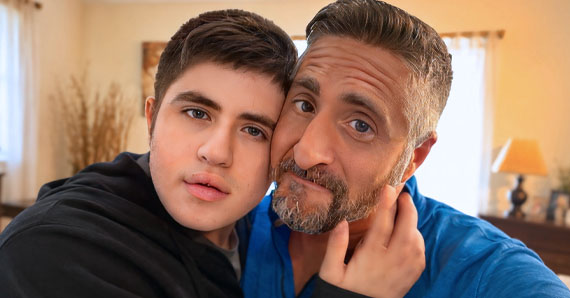
I told someone about my son the other day. It wasn’t in-depth. Just a sentence.
“My son is 15. He’s nonverbal.”
Her response was one sentence too.
“Oh. I’m sorry.”
What’s strange is that it took me a minute to understand what she meant. Had she not heard me? Was she saying “I’m sorry” as if to ask “excuse me”? What was there to be sorry about?
That momentary lapse of understanding showed me something. It showed me how far I’ve come from the days of “grieving.”
For those without a special needs child, that word has a definite meaning. You use it to describe the process following a death. You grieve the loss. You grieve the future that goes on without your loved one there.
That word never sat right with me as it relates to having a child like mine, but I get it. It’s one of those things associated with “severe autism” that rubbed me the wrong way at first but makes total sense when you think about it.
You know, similar to the phrase “severe autism.”
At the end of the day, grief is the perfect word for what I and countless other parents go through in the aftermath of a diagnosis. You grieve a life that you expected for your child.
I didn’t realize it at the time, but that’s exactly what I had to do. It was about the probability of things happening in Lucas’s life dropping before my eyes. I had to give up a lot of dreams I may have had for my boy.
Now, keep in mind, I didn’t have a ton of dreams for either of my children. I always just wanted them to be the best they could be. So luckily, having a son who won’t debate or wrestle wasn’t going to crush me, but I know others who would be smothered by the heartache.
Parents like that are all around you. Their kids follow in their footsteps, and it almost feels like that was the plan from the start. This college baseball star wants his kid to be a baseball star. This career firefighter wants his kid to battle the blazes too.
When that can’t happen, it crushes them. I see it. I feel it. I empathize.
…to an extent.
I often say that my superpower is that having a child like mine allows me to throw a critical eye on parents that others deem untouchable. Seeing another special needs parent fumbling the opportunity to connect with their child is something I can point out while others, without kids like mine, can simply shrug and say, “I can’t even begin to understand the grief they must feel.”
Well, I do. I went through it myself.
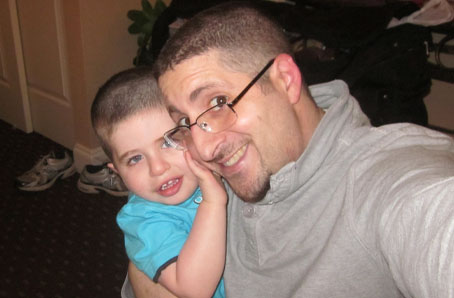
You need to take that moment, soak in the reality, and accept that the life you may have had planned will not happen.
But, eventually, you have to get up, make coffee, go to work, and learn to understand the child the universe graced you with.
Will that child play baseball? Maybe. Maybe not. People will remind you that anything can happen. Some kids don’t do X, Y, and Z until they’re whatever years old. They’ll tell you everything.
And they might be right.
But the chance that those hopes and dreams won’t materialize still hangs overhead. At some point, you have to stop building your relationship with your child around what might happen someday. Instead, it will be your child who leads you toward new hopes and dreams.
My son has never said a word. Our milestones are things like putting on his own socks, shaking his head “no,” or showing he can understand a new phrase. It’s a far cry from winning homecoming, but it’s worth even more in our world.
Realizing that, though, was on me.
At a certain point, not letting go of the grieving process means something a lot worse than some parents realize.
It shows you haven’t accepted your child.
Sounds harsh? It is. I told you. It’s my superpower.
The reason I can say such a harsh thing is because this blog, my stance, and my point of view have never really been about parents like me.
It’s about people like my son. It’s about people like Lucas.
To listen to a parent with a child in their late teens still struggling with acceptance breaks my heart. It breaks my heart because each passing year is another year that they can’t see the gift before them.
Is that gift hard to manage? Of course. I don’t even mean that in the “every kid is difficult” sense. There are very real challenges to raising a child like mine.
Lucas, though, is more than a collection of challenges. He’s more than a list of things he won’t learn to do.
Lucas is my son.
The life he lives and the person he is are wonderful. By accepting him, I’m able to raise him to be the best person he can be, rather than crying over the person he could never be.
I had to grieve that life initially, but I’m so glad I didn’t stay stranded on that island of misery for longer than I needed to. It has allowed me to embrace this relationship that’s unlike any I’ve ever had.
You grieve over the child you won’t have. But if you don’t stop grieving, you miss out on the child you actually do.
As a parent, there’s nothing to be more sorry about than that.
Looking for a speaker who talks about parenting, connection, and reframing expectations?
You can book James Guttman here.
If this story resonated with you, I talk more about topics like these on
Hi Pod! I’m Dad.
READ NEXT: Divorced Dad On “Staying Together For The Kids”
Follow Us on Facebook, TikTok, and Instagram.


You must be logged in to post a comment.