
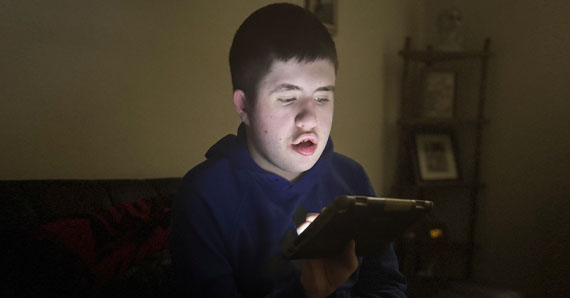
I just made a cheese quesadilla. It’s 8:30 in the morning.
Lucas, my nonverbal son, requested it…for breakfast.
Don’t get it wrong, I tried to offer breakfast food. I took out Eggo French Toast Sticks, our usual go-to, and he pushed them back towards the freezer. I showed him bread to make toast, and he disregarded that in the same manner.
When he saw the wraps, he tapped them twice and walked away. I knew then that it was going to be a quesadilla morning.
And I know that you’re not supposed to eat cheese quesadillas for breakfast (breakfast quesadillas notwithstanding). However, I also know something else.
“Supposed to” isn’t a practical phrase in our home.
My boy has been thumbing his nose at “supposed to” for years. His approach to life isn’t like yours. It isn’t like mine. It’s not like anyone’s. It’s all his own.
One of the most amazing things about Lucas is that everything he wants is genuinely his own. He isn’t looking to anyone else for approval or inspiration. He doesn’t see some cool kid doing something and try to emulate it. Everything about Lucas comes from inside of Lucas.
This is such an amazing concept to me and, above all, the thing I still stand in awe of when it comes to my son. It’s the top rung of my autism appreciation journey.
It is an opportunity to see a person in the purest sense. This is who he is, in the realest sense, every single day.
When he was little, though, there was that impulse to stop him.
I remember holding his hands to stop the incessant clapping. In my head, I had to show him how to do things. I had to teach him to be like everyone else. In hindsight, I cringe.
He would spin the wheels on a toy car and I’d feel the need to come over and correct him. I’d consider it my mission to show him “the right way” to enjoy his time. Back then, it seemed completely rational. It seemed like my duty.
Normally, he’d watch as I’d take the toy in my hand and begin dad-splaining how we were “supposed to” use it. He’d watch patiently.
Then, when I’d hand it back, he’d go back to spinning the wheels again.
I would get frustrated and tell myself, “Oh. He doesn’t understand me.”
Actually, though, he did. I know this because sometimes he would copy my motions for certain toys or life skills. It wasn’t that he couldn’t see my demonstration.
It was that he didn’t care. He liked what he was doing and he wanted to do it that way. It wasn’t hurting anyone. What was the harm?
There was none.
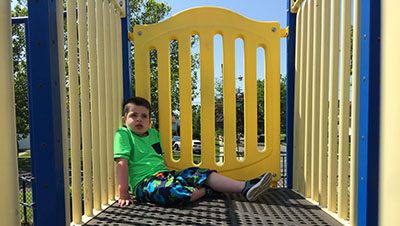
Sure, older friends and relatives might insist that allowing him to stim or play inappropriately was just promoting his different behaviors. To them, the only way to make him just like everyone else was to show him how to be just like everyone else.
But, even then, I didn’t want Lucas to be “just like everyone else,” at least not in most cases.
I wanted Lucas to be Lucas. I wanted him to love the world. I wanted him to be happy.
That was the point behind everything. Every concern and worry I had boiled down to my fear that my son wouldn’t have a happy life. Words, skills, social interactions – all of them were so important to teach him so that, one day, he could be happy.
So then why was I stopping him from doing something that made him happy? Why was I correcting his natural instincts? Why was I making my son feel he was less than or not living up to an expectation? Why was I so arrogant as to tell him how to have fun if he wasn’t hurting anyone?
It was me. It was my fears and my willingness to let the world dictate what was correct for him.
How you enjoy your life isn’t a choice that others make. It’s a choice you make yourself. The pursuit of happiness is everyone’s right, whether you’re on a spectrum or not. No one should have their leisure time corrected, as long as they’re not infringing on anyone else.
Lucas wasn’t infringing on anyone else by spinning car wheels or flipping the corners of his board book. I was the one infringing on him.
This all changed after my heart surgery in 2012. I came home from that hospital with a new outlook. My goal was to understand why he did the things he did, not correct them.
And guess what? I learned so much about my boy from that approach. I saw that he looked for glares in windows and mirrors. I discovered that he loved certain transitions in videos, causing him to pause and unpause YouTube at the exact right moments. I noticed that food was more textural than taste-based.
I found out who my son is.
Who is he? He’s his own person. He loves what he loves and does what he does. I respect him for it deeply. It’s so unique and unlike anyone else I’ve ever met.
Today, he spins the wheels, claps and jumps, and pauses his YouTube whenever he feels the need. No one corrects him. No one has that right.
And yeah, he also eats quesadillas for breakfast, if he wants. It’s who he is and I love him for it.
Looking for a speaker who talks about parenting, connection, and reframing expectations?
You can book James Guttman here.
If this story resonated with you, I talk more about topics like these on
Hi Pod! I’m Dad.
READ NEXT: It’s 4:30AM, and I Just Learned Something About Autism Appreciation
Follow Us on Facebook, TikTok, and Instagram.


You must be logged in to post a comment.